About

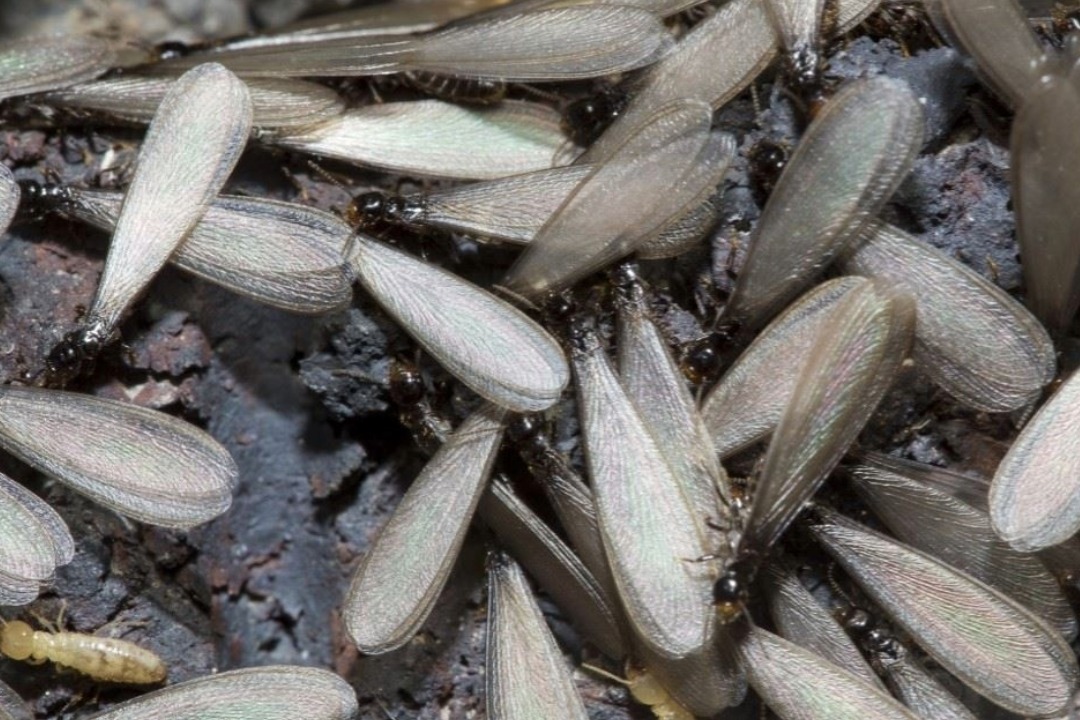
Termites are highly organized, social insects that live in colonies with specific roles. One of the most important stages in a colony’s lifecycle is swarm season, when winged reproductive termites (future kings and queens) leave to form new colonies. (Purdue University).
In Indiana, Kentucky, Ohio, Tennessee, and West Virginia, termite swarm season typically occurs in spring through early summer, especially after warm temperatures and rainfall.
If you see swarmers, it is always a sign of a nearby active colony.
While winged termites might seem harmless, ignoring them can lead to structural damage costing homeowners billions of dollars annually.
Swarm season is one of the earliest visible warning signs of termite activity.
Many homeowners ask: “Is termite treatment really worth it?”
The reality is:
By the time damage is visible, termites have already been feeding on structural items.
Subterranean termites feed on cellulose, meaning anything containing wood or plant-based material is at risk:
Professional termite inspections remain the only reliable way to determine the extent of hidden infestations or termite damage.
While different termite species can leave distinct signs, in our area there is only one species to worry about: the Eastern Subterranean termite. They live underground and build mud tubes to travel between soil and your home. They can enter through cracks as small as 1/32 of an inch.
Signs of Subterranean Termites include:
In Indiana, Kentucky, Ohio, Tennessee, and West Virginia, termite swarms typically happen in spring and early summer, after the last freeze – usually when temperatures reach about 70 degrees – the young adult male and female swarmers emerge from their nests in large groups. The female termites release ‘mating pheromones,’ much like perfume, to entice male termites. Once the male locates an alluring female, they break off their wings, symbolizing that they are a couple. The new couple then select a nest location, mate, and become king and queen of a new colony (Pestworld.org). The queen has been known to live for 30 or more years. The exact timing can vary from year to year.
Homeowners should remain especially vigilant after heavy rainfall, when soil moisture stimulates colony movement.
Termite swarms are usually brief, often lasting 30-60 minutes, though in some cases they can continue for several hours. Discarded wings may remain visible for days until they are cleaned up. While the swarming itself is short-lived, the colony behind it remains active year-round, feeding from the cellulose in wood and wood by-products.
Visual Identification Tip:
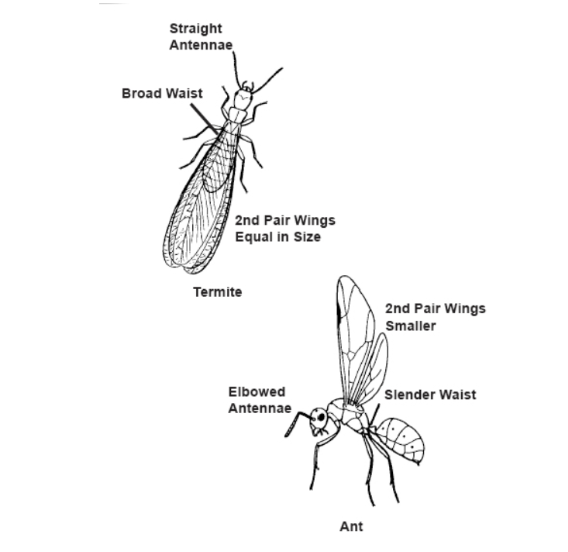
Termite swarmers/reproductives in Indiana, Kentucky, Ohio, Tennessee and West Virginia are small black insects and often get confused with ants.
The name Isoptera means "equal wing" and refers to the fact that in the adult stage, all four wings are of the same length. Ants have three distinct body sections with a narrow, pinched waist, while termites have two body sections with a straight, uniform body.
If you notice termite swarmers inside or around your home:
Acting quickly can significantly reduce the risk of extensive structural damage.
Here’s the truth most homeowners don’t hear:
It’s not if you’ll get termites - it’s when.
Termites are a natural part of the environment across Indiana, Kentucky, Ohio, Tennessee, and West Virginia. They live underground, move silently, and can enter your home without you ever noticing. By the time you see damage, they’ve often been there for months - or even years.
Most homeowners only think about termites after they see a problem. That’s where things get expensive.
Termites don’t just “show up” — they continuously forage for food 24/7, and your home is a prime target. Once they find it, they don’t stop.
Here’s the reality:
Now compare that to prevention:
Prevention isn’t an expense - it’s protection against a much bigger bill.
At Black Diamond, we don’t just treat termites - we help you stay ahead of them. If you haven’t had your home protected, now is the time.
Preventive action significantly reduces long-term risk.

Expert Reviewed by Keith Duncan, CEO of Black Diamond Pest Control.
Keith Duncan, Jr. is the CEO of Black Diamond Pest Control, a family-owned pest management company headquartered in Jeffersonville, Indiana. With decades of hands-on experience in the pest control industry, he began his career as a termite technician and has since held nearly every role within the company. This comprehensive background has given him deep expertise in pest behavior, treatment methods, and long-term prevention strategies for general and specialty pest services including termites and bed bugs, wildlife control, and turf maintenance.